
Why upgrade decisions often feel unclear
Deciding when to upgrade hosting rarely comes with a clear signal. Most websites continue to function even when the setup is no longer an ideal fit.
The question when should you upgrade hosting doesn’t usually appear at the beginning. It tends to surface after small changes start to accumulate, often without a single moment that clearly explains what’s happening.
Part of the uncertainty comes from how gradual those changes are. Performance doesn’t drop all at once. It shifts in subtle ways, making it harder to tell whether the issue comes from the website itself or the environment supporting it.
Clarity builds over time rather than from a single trigger, and recognizing that pattern is often what helps the decision start making sense.
What shared hosting handles well (and where it fits)
Shared hosting works well for websites with steady, predictable activity. In the early stages, most sites don’t require complex resources, and the environment is often sufficient to support normal operation without noticeable issues. It fits particularly well when usage remains consistent. Pages load, content updates smoothly, and day-to-day interactions stay within a manageable range. In practical terms, shared hosting tends to support:- Low to moderate traffic levels Visitor activity stays within a stable range without sudden spikes.
- Simple site structures Fewer dynamic elements, limited integrations, and minimal background processes.
- Gradual growth Changes happen over time, allowing the environment to keep up without strain.
- Basic functionality without heavy demand Standard pages, blogs, or small business sites that don’t rely on continuous interaction.
How website behavior changes over time
A website rarely stays in its original state. What begins as a simple setup gradually evolves as content grows, features are added, and more users begin to interact with it.
Early on, activity tends to be predictable. Traffic remains steady, interactions are limited, and the system handles requests without noticeable pressure. Over time, those usage patterns begin to shift, often without a clear starting point.
Growth introduces variation. More visitors arrive at once, content updates become frequent, and background processes start overlapping. That growth doesn’t always feel dramatic, but it changes how the website behaves under normal conditions.
The difference becomes noticeable in how the system responds. Actions that once felt instant begin to take slightly longer, and consistency becomes harder to maintain during periods of higher activity.
Change happens gradually, not suddenly. Recognizing that progression makes it easier to understand why a setup that once worked well may begin to feel different later on.
Early signs your current setup is being stretched
A setup doesn’t usually fail without warning.
Small changes begin to appear first, often during normal use.
When responsiveness starts to feel uneven
Pages still load, but not with the same consistency.
Some actions feel immediate, while others take longer than expected. That variation in responsiveness becomes noticeable before any clear issue appears.
When performance changes under routine activity
The website works well at certain times and slows down at others.
These performance changes don’t always align with major traffic spikes. They can show up during regular usage, especially when multiple processes run together.
When everyday actions require more time
Tasks that once felt simple begin to take longer.
Loading pages, navigating between sections, or updating content may introduce slight delays that gradually affect the overall experience.
When consistency becomes harder to maintain
The site continues to function, but the experience no longer feels stable.
Those inconsistencies often signal that the environment is starting to reach its limits.
The signs remain subtle at first.
They don’t interrupt the site completely, but they change how it behaves under normal conditions.
Make the Smart Move from Shared to Cloud Hosting
Not sure which hosting is the right fit for your website? Our experts are here to help you compare features, performance, and compatibility so you can choose the best hosting solution with confidence.
Get started todayWhen early performance issues start affecting real experience
Early signals often stay in the background until they begin to influence how the site feels during use. What starts as a slight delay or uneven response gradually becomes part of the overall experience.
Visitors don’t see technical limitations; they respond to how smoothly the site behaves. When consistency begins to slip, navigation feels less predictable, and actions take longer than expected.
That shift affects perception before it causes failure. A website may still function, but reduced stability changes how confident users feel while interacting with it.
Over time, those small disruptions shape behavior. Fewer pages are explored, interactions become shorter, and the experience feels less reliable even without obvious errors.
What actually changes with cloud hosting
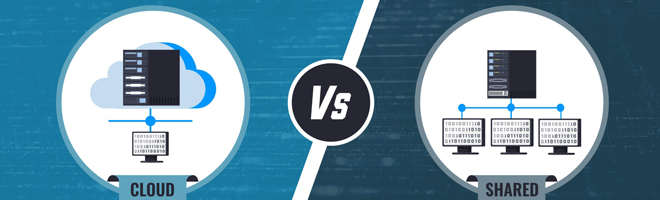
The shift to cloud hosting isn’t about switching to something “better.” It’s about how the environment is structured to handle changing conditions. Instead of relying on a single setup with fixed limits, the system distributes activity across multiple resources. That structure allows the website to respond differently as demand increases or becomes unpredictable. In practical terms, a few things begin to change:- Handling of variable activity The environment adjusts more smoothly when traffic or interactions fluctuate.
- Distribution of load Requests are not handled by a single point, which reduces pressure during peak moments.
- Adaptability over time The setup can align more easily with growth or shifting usage patterns.
When upgrading is still not necessary
An upgrade can feel like the natural next step, especially when performance becomes a concern. In many cases, shared hosting continues to support a website effectively, even as it grows. Stability in usage is often a good indicator. If traffic remains predictable and interactions follow a consistent pattern, the current setup may still be aligned with how the site operates. There are situations where upgrading is not always necessary:- Traffic remains steady over time No sudden spikes or unpredictable surges that put pressure on the system.
- Performance stays consistent during daily use Pages load reliably, and interactions don’t vary significantly under normal conditions.
- Features and functionality are relatively simple Limited plugins, integrations, or background processes.
- Growth happens gradually and remains manageable Changes don’t introduce additional strain on the environment.
How to recognize the right time to move
Clarity begins when the focus shifts from options to behavior.
A website reveals its needs through how it performs under normal conditions and how it responds when activity increases.
The decision often depends on usage, especially when patterns start to change.
Traffic becomes less predictable, interactions overlap, and maintaining consistency requires more effort than before. Those shifts point toward evolving scaling needs, even if nothing appears broken.
Looking at how the site behaves during both steady periods and busier moments helps bring that difference into focus.
When the environment handles both without strain, the current setup still fits. When the gap between those conditions becomes more noticeable, the need for change becomes easier to recognize.
At that stage, considering a suitable website hosting solution becomes part of aligning the setup with how the website is expected to perform.
The timing doesn’t come from a single signal.
It becomes clear when the environment and the website no longer move at the same pace.
Timing matters more than power
Decisions around upgrading from shared hosting don’t need urgency.
What matters is whether the current setup still aligns with how the website behaves in real use.
Growth, traffic variation, and interaction patterns develop over time.
When the environment keeps up with those changes, there’s no immediate need to move. When it doesn’t, the shift becomes easier to recognize without forcing the decision.
Clarity comes from timing, not from choosing a more powerful option.
Outgrowing Shared Hosting? Make the Switch Today
If your website is slowing down or struggling to handle growing traffic, it’s time for an upgrade. Move to cloud hosting for better speed, reliability, and scalability—so your site can perform without limits.
Switch NowPosted on GoogleTrustindex verifies that the original source of the review is Google. I am having an excellent experience with Boundless Technologies! I used them for branding purposes for myself, a complete website redesign, and marketing campaigns for my courses. The team is fantastic and always responds promptly. Most importantly, their CEO, Hussain, is hands-on and brings innovative, out-of-the-box ideas to the table. I am particularly impressed with the design team's creativity and deep understanding of my needs. Highly recommended!Posted on GoogleTrustindex verifies that the original source of the review is Google. Absolutely exceptional service from boundless technologies. They were highly professional and delivered exactly what they promised. Their expertise and guidance helped me achieve my mobile app goals. I'm thoroughly impressed and grateful for their outstanding work. Highly recommended!Posted on GoogleTrustindex verifies that the original source of the review is Google. Amazing services. I made a mobile app from boundless technologies and they made a great app for my company. I really appreciate.Posted on GoogleTrustindex verifies that the original source of the review is Google. NEGATIVE STAR REVIEW: DON'T USE THIS COMPANY!!!! I regret to say that our experience with Boundless Technologies for social media marketing services has been nothing short of disastrous. They over-promised and severely under-delivered, leading to a complete waste of time and money. As a business based in Toronto, Canada, we were initially assured by Boundless Technologies that they would accommodate our schedule and respond to our queries promptly. Unfortunately, this was far from the reality. Both Mr. Anas (Project Manager BT) and Mr. Tanveer (CEO) were unresponsive, often refusing to return calls when we encountered issues. Our assigned project manager, Anas (Project Manager BT), was particularly DIFFICULT to work with. He consistently ignored our calls and showed a blatant disregard for our time and business needs. His unprofessionalism and lack of communication were incredibly FRUSTRATING and hindered our project progress. Boundless Technologies failed to meet their promises and provided us with a subpar service that was a complete waste of resources. I strongly advise DO NOT DO BUSINESS WITH THEM. I repeat, DO NOT DO BUSINESS WITH THEM.Posted on GoogleTrustindex verifies that the original source of the review is Google. Boundless Technologies is a standout provider in the realm of digital marketing, web development, and domain and hosting services. My experience with them has been exceptional, reflecting their commitment to quality and customer satisfaction. Their digital marketing services are top-notch, employing the latest strategies and tools to ensure robust online visibility and engagement. From SEO to social media marketing, their team is knowledgeable and efficient, driving impressive results for my business. I highly recommendPosted on GoogleTrustindex verifies that the original source of the review is Google. We are happy customer of Boundless Technologies, after the successful completion of Website, we regularly in contact with them and receive positive response from them.Posted on GoogleTrustindex verifies that the original source of the review is Google. Boundless Technologies and their support are excellentPosted on GoogleTrustindex verifies that the original source of the review is Google. Supportive ResponsePosted on GoogleTrustindex verifies that the original source of the review is Google. Excellent Services with good support... CEO FASTCOMLoad more